

Many homeowners around Port St. Joe and WindMark Beach assume that without impact windows and doors, they can’t get “opening protection” credit on a wind mitigation inspection. That isn’t how the form works. Approved storm shutters or panels that cover every glazed opening can count the same way impact glass does, if they’re properly rated and documented.
Insuring the Coast Insurance Agency is an independent agency at 402 Reid Ave, Ste B, in Port St. Joe. Here’s how the opening protection question works and what your inspector needs to see.
In this guide
- What “Opening Protection” Means on the Wind Mitigation Form
- The Key Point: The Form Doesn’t Require Impact Glass
- The Opening Protection Categories, Explained
- Documentation: What Your Inspector Needs to See
- The Inspector Decides, the Carrier Sets the Credit
- Quick Checklist: Opening Protection
- Frequently Asked Questions
What “Opening Protection” Means on the Wind Mitigation Form
Florida’s current Uniform Mitigation Verification Inspection Form, OIR-B1-1802 (Rev. 04/26), has been required for inspections since April 1, 2026, according to the Florida Department of Financial Services. Opening protection is question 9 on that form. It asks one thing: what is the weakest form of windborne debris protection on the house?
Openings include windows, doors, sliding glass doors, skylights and garage doors (not roof vents). The form looks at two groups:
- Glazed openings have glass: windows, sliding and glass doors, skylights, glass block, and garage or entry doors with glass.
- Non-glazed openings are solid entry doors and solid garage doors.
The key word is weakest. The home is rated by its least-protected opening.
The Key Point: The Form Doesn’t Require Impact Glass

For the top two categories, the form says all glazed openings must be protected, at a minimum, with impact-resistant coverings or products listed as windborne debris protection devices in the Florida or Miami-Dade product approval system, and tested to the standards the form lists for cyclic pressure and large-missile impact.
In plain English, that can be impact windows and doors, or approved shutters or panels over regular glass. If the product meets the same standard, the form puts both in the same category. So a home with standard glass and rated, documented shutters on every glazed opening may land in the same category as a home with impact glass.
Have a question? Reach out to us.
Our Port St. Joe team is happy to talk it through.
The Opening Protection Categories, Explained
Here’s how the form defines each answer for glazed openings:
- A: Every glazed opening has verified protection that passed cyclic pressure and large-missile testing (a 9-lb missile for windows and doors, 4.5 lb for skylights).
- B: Every glazed opening has verified protection tested to a 4-to-8-lb large missile (2 to 4.5 lb for skylights).
- C: Every glazed opening is covered with plywood or OSB panels that meet Table 1609.1.2 of the 2007 Florida Building Code.
- N: Every glazed opening has some covering, but it can’t be verified as A, B or C. This includes shutters that look like they qualify but have no documentation.
- X: One or more glazed openings have no windborne debris protection.
- Z: One or more openings are damaged and need repair or replacement.
Two details matter a lot here:
- “All” means all. One unprotected window, sliding door or skylight can drop the whole home to X.
- Damage matters. The form says buildings with openings that need replacement don’t qualify for wind mitigation rate differentials at all, regardless of their other features.
Don’t forget the solid doors
The A, B, C and N answers each have sub-levels (such as A.1, A.2, A.3) based on your non-glazed openings: solid entry and garage doors. The top sub-level generally needs those doors rated at the same level as your glazed openings, or higher. A garage door rated only for wind pressure, or not rated at all, may move you to a lower sub-level.
Need a quote?
Have shutters or panels? Let's see how they show up on your policy.
Documentation: What Your Inspector Needs to See
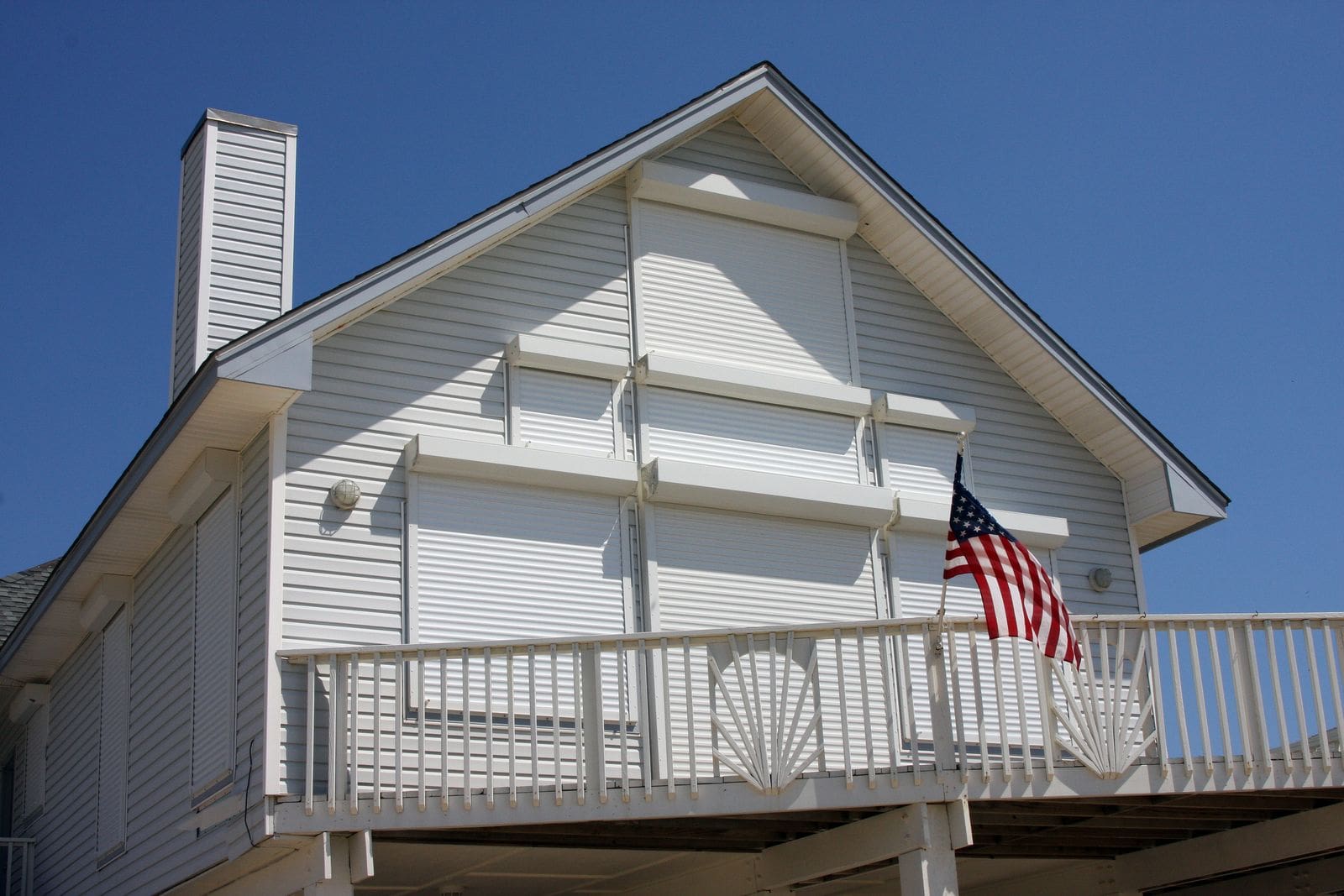
The form requires at least one photo or document for each feature marked, and A, B and C require a verified product. Shutters that look strong but can’t be identified are rated N. Helpful items:
- Product approval numbers: a Florida Product Approval number or a Miami-Dade Notice of Acceptance (NOA lookup).
- Labels on the shutters, tracks, windows or garage door.
- Permits and invoices from the installer.
- Photos of each opening with its protection in place.
Keep removable panels labeled and where the inspector can see them. A missing panel may count as an unprotected window.
Local tip: Before your inspection, walk the house and count every window, glass door, skylight and garage door. Make sure each one has a rated panel or shutter, and pull out the installer’s paperwork.
The Inspector Decides, the Carrier Sets the Credit
The inspector picks the category based on what’s installed and can be verified. Your insurance company then applies its own filed rating plan, so how much opening protection affects your premium, if at all, depends on your carrier and your home’s other features. The form itself notes that some items may not qualify for a discount.
A completed form is valid for up to five years if no material changes are made and no inaccuracies are found. If you’ve added shutters or replaced windows or a garage door since your last inspection, a new one may be worth a look. For every question on the form, see our Florida wind mitigation inspection guide.
Eligible homeowners may also check the state’s My Safe Florida Home program, which lists window, exterior door and garage door upgrades among the improvements it may help fund. Eligibility rules apply.
Quick Checklist: Opening Protection
- ✓Counted every window, glass door, sliding door, skylight and garage door
- ✓Confirmed each glazed opening has a shutter, panel or impact product
- ✓Found product approval or NOA numbers, labels or installer paperwork
- ✓Checked the rating on the garage door and solid entry doors
- ✓Repaired any damaged windows, doors or tracks before the inspection
- ✓Sent the new wind mitigation report to your agent
Get Your Opening Protection Reviewed
Not sure how your shutters showed up on your last wind mitigation report? Send it to us. Insuring the Coast Insurance Agency can review whether available credits are reflected on your policy and compare homeowners insurance options for homes in Port St. Joe, WindMark Beach and across Gulf County, subject to availability and underwriting. See also our guide to wind coverage and hurricane deductibles.
Call or text (850) 203-3643 or email your report to . You can also request a quote online or visit our Port St. Joe office at 402 Reid Ave, Ste B, Port St. Joe, FL 32456.
Frequently Asked Questions
Do I need impact windows to get opening protection credit?
Not necessarily. On the OIR-B1-1802 form, approved shutters or panels that meet the listed impact standards can qualify for the same category as impact windows, as long as every glazed opening is protected and the product can be verified.
Does plywood count?
It may. Plywood or OSB panels meeting Table 1609.1.2 of the 2007 Florida Building Code on every glazed opening are category C. Unverified plywood would generally be N.
What if only some of my windows have shutters?
Then the form generally rates the home X, the lowest category for glazed openings.
Does my garage door matter?
Yes. A garage door with glass counts as glazed, and a solid one affects your sub-level.
How much will shutters lower my premium?
We can’t promise any amount. Credits follow each insurer’s filed rates and your home’s other features. We can review your report and compare quotes.
Have a question? Reach out to us.
Our Port St. Joe team is happy to talk it through.
This article is provided by Insuring the Coast Insurance Agency for general informational purposes only. It is not an insurance contract, a guarantee of coverage or rates, or legal advice. Coverage is subject to the terms, conditions and exclusions of the policy issued, as well as underwriting approval and availability. Premiums, credits and eligibility vary by carrier and property. The wind mitigation form’s definitions are for inspection purposes only and don’t certify any product as offering protection from hurricanes. Photos: Mark Wolfe/FEMA and Robert Kaufmann/FEMA, public domain, via Wikimedia Commons. Please contact a licensed insurance agent to review your specific situation.


